Remodeling a kitchen is one of those home projects that can start with a simple thought—“I just want a better kitchen”—and quickly turn into questions about cabinets, countertops, appliances, flooring, electrical work, plumbing, permits and, of course, the budget.
So, how much does a kitchen remodel cost in the Bay Area?
There isn’t one price that fits every kitchen. A small cosmetic update can have a very different budget from a complete kitchen transformation that changes the layout, replaces cabinetry and upgrades plumbing, electrical and appliances.
The good news is that you can get a much clearer idea of your potential investment by understanding what actually drives kitchen remodeling costs.
In this guide, we’ll break down the major factors that influence the cost of a kitchen remodel, what different budgets can accomplish, how the size of your kitchen affects the project and how to plan a realistic renovation budget.
How Much Does a Kitchen Remodel Cost?
The cost of a kitchen remodel depends primarily on the size of the kitchen, the scope of work, material selections and whether the existing layout can remain unchanged.
A basic kitchen update may involve cosmetic improvements such as painting, hardware, lighting or replacing a few finishes. A more involved remodel can include new cabinets, countertops, flooring, backsplash and appliances. A full renovation may also require plumbing, electrical or layout changes.
Instead of choosing a budget based on a single average number, start by deciding what you actually want to change.
Ask yourself:
- Are the existing cabinets staying?
- Do you want to change the kitchen layout?
- Are you replacing appliances?
- Do you need new countertops?
- Will plumbing or electrical locations change?
- Are you replacing flooring and backsplash?
- Do you want custom storage or cabinetry?
- Are permits likely to be required?
The answers to these questions can make a much bigger difference than kitchen size alone.
What Is Included in a Kitchen Remodel?
One reason kitchen remodeling costs can be difficult to estimate is that the phrase “kitchen remodel” can mean very different things to different homeowners.
For one homeowner, remodeling may mean replacing countertops and backsplash. For another, it may mean removing the existing kitchen and rebuilding the space from the ground up.
A kitchen project can include:
- Cabinet replacement or refinishing
- Custom cabinetry and storage
- Countertop installation
- Backsplash installation
- Flooring
- Appliance upgrades
- Lighting
- Electrical improvements
- Plumbing work
- Sink and faucet replacement
- Painting
- Layout modifications
- Additional storage solutions
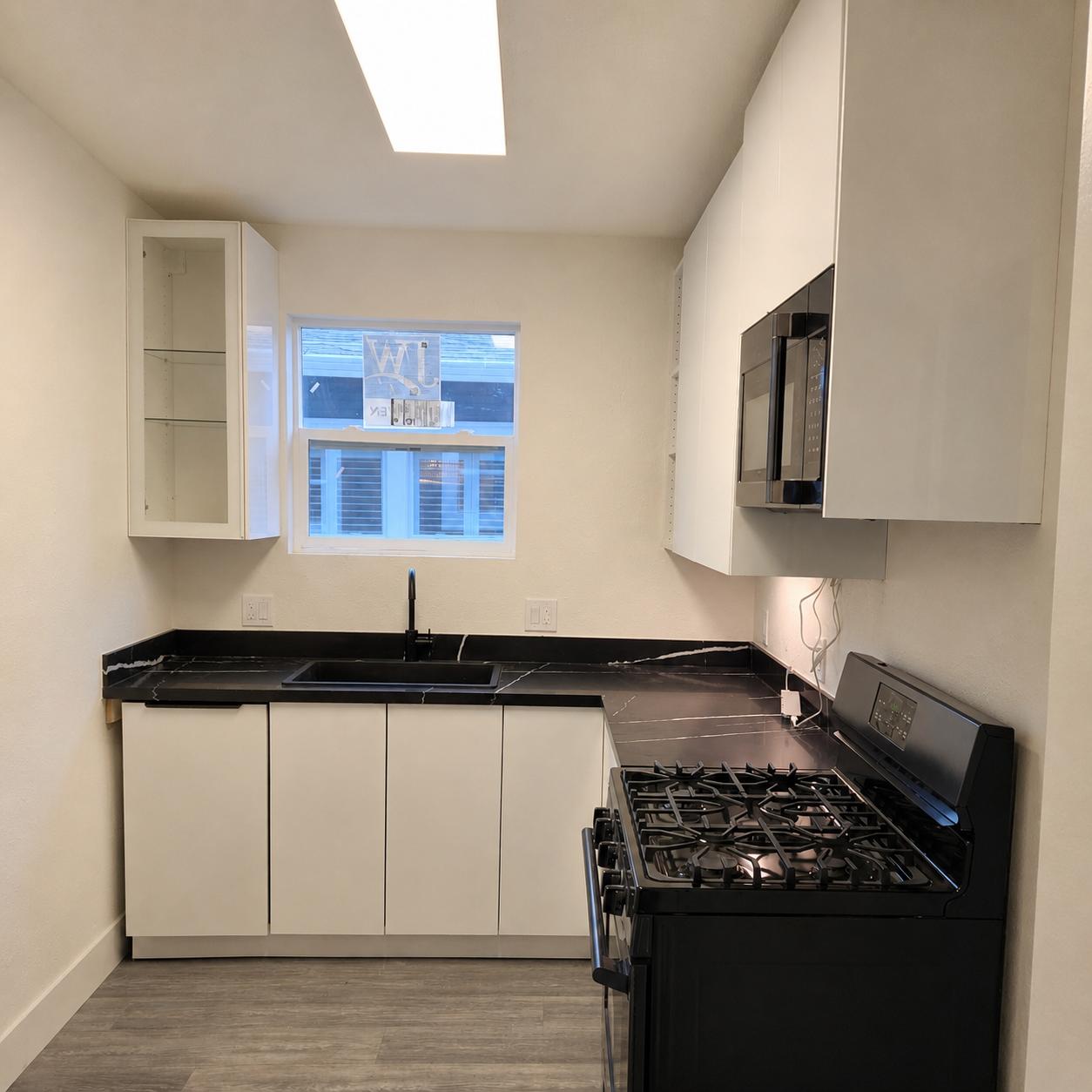
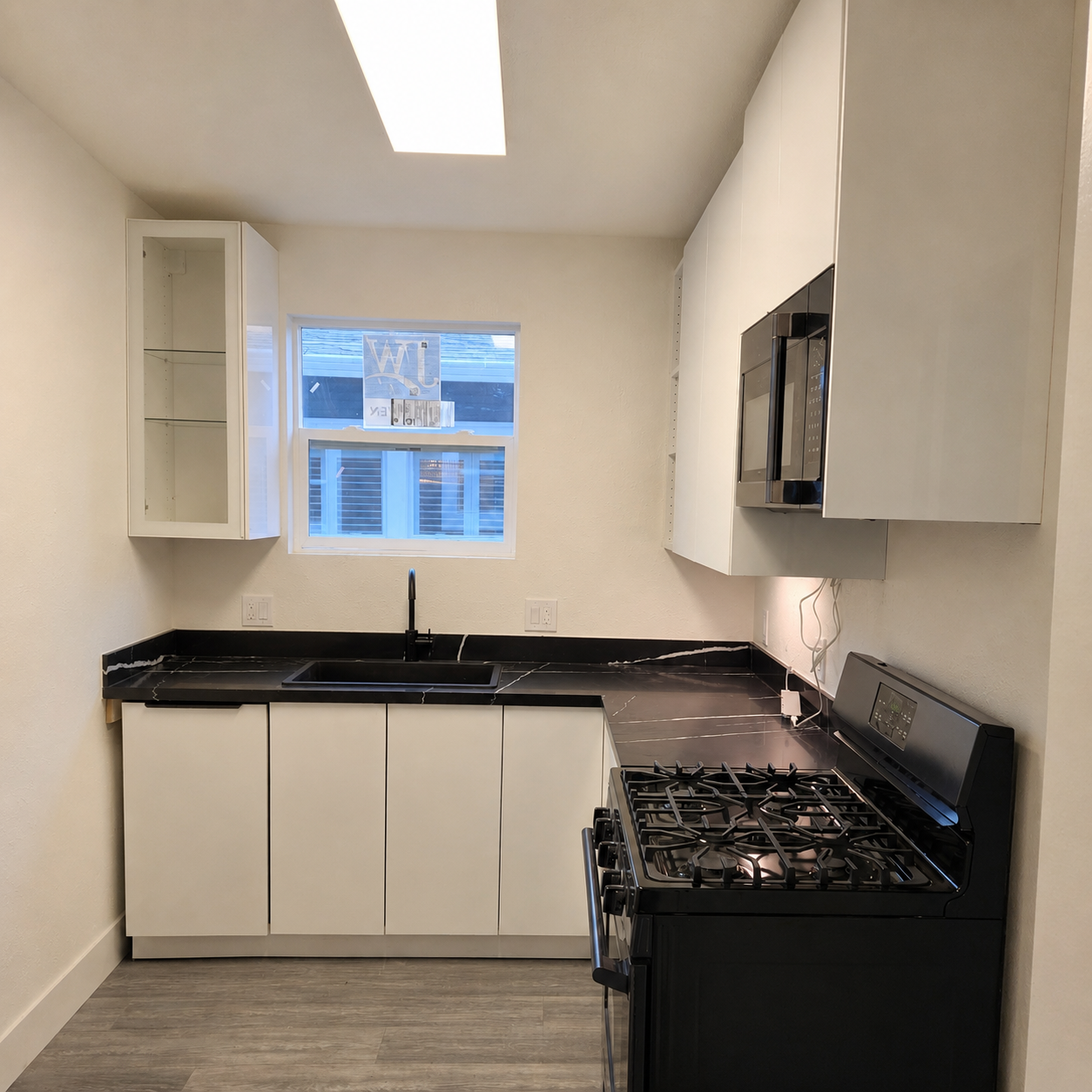
At Projat Solutions, kitchen upgrades can range from smaller improvements to more complete transformations, with options including cabinetry and storage, countertops, flooring, backsplash and appliance upgrades.
That flexibility is important because you don’t necessarily have to renovate everything at once.
Kitchen Remodel Cost by Project Scope
Before choosing materials or browsing kitchen inspiration photos, decide what level of renovation you actually need.
Cosmetic Kitchen Update
A cosmetic update focuses on appearance rather than completely rebuilding the kitchen.
This might include:
- New cabinet hardware
- Fresh paint
- Updated lighting
- New backsplash
- Countertop improvements
- Minor fixture changes
- Selected appliance upgrades
This approach can make a noticeable difference while keeping the project more focused.
Partial Kitchen Remodel
A partial remodel goes beyond cosmetic changes but doesn’t necessarily involve replacing everything.
For example, you might keep the existing kitchen layout while upgrading:
- Cabinets
- Countertops
- Flooring
- Backsplash
- Appliances
- Lighting
- Storage
This can be a practical option when the current kitchen layout works but the finishes and functionality no longer meet your needs.
Full Kitchen Remodel
A full kitchen remodel typically involves a much larger transformation.
Depending on the project, it may include:
- New cabinetry
- New countertops
- New flooring
- New backsplash
- Appliance replacement
- Plumbing updates
- Electrical work
- Lighting
- Layout changes
- Additional storage
- Other construction work
The more components involved, the more important it becomes to establish a detailed scope before construction begins.
How Much Does a Small Kitchen Remodel Cost?
A small kitchen does not automatically mean a small remodeling budget.
A compact kitchen may require fewer materials, but certain costs—such as labor, design, demolition, plumbing, electrical work and installation—can still represent a significant portion of the project.
For a small kitchen, one of the smartest approaches is to decide which improvements will have the biggest impact.
For example, instead of changing every element, you could prioritize:
- Better storage
- Updated cabinetry
- New countertops
- Improved lighting
- A fresh backsplash
- More efficient appliances
If the existing layout already works well, keeping major plumbing and electrical locations where they are may also help keep the project more manageable.
How Much Should a 10×10 Kitchen Remodel Cost?
The 10×10 kitchen is commonly used as a reference point when homeowners research remodeling costs, but it’s important to understand that a 10×10 kitchen does not automatically have a fixed remodeling price.
Two kitchens with the same dimensions can have completely different project costs.
For example, consider two homeowners:
Kitchen A:
The homeowner keeps the existing layout, chooses standard cabinetry, replaces countertops and backsplash, and upgrades a few appliances.
Kitchen B:
The homeowner changes the layout, chooses custom cabinetry, upgrades countertops and appliances, moves plumbing and electrical connections, and adds premium finishes.
Both kitchens may be approximately 10×10, but their remodeling budgets could be dramatically different.
That’s why square footage should be treated as a starting point—not a complete estimate.
What Factors Affect Kitchen Remodeling Costs?
If you’re trying to figure out how much it will cost to remodel your kitchen, these are the areas you should consider first.
1. Cabinetry
Cabinets can have a major influence on the overall budget.
Stock, semi-custom and custom cabinetry can have very different pricing, and the final cost also depends on the number of cabinets, construction quality, hardware, finishes and storage features.
If storage is a major problem in your current kitchen, investing in a better cabinet layout may provide more everyday value than simply choosing the most expensive finish.
2. Countertops
Countertop cost depends on the material, size, edge details, installation requirements and complexity of the kitchen.
Popular options include materials such as:
- Quartz
- Granite
- Marble
- Other engineered or natural surfaces
Projat specifically highlights countertop installation as part of its kitchen upgrade services.
3. Appliances
Appliances can range from relatively straightforward replacements to major investments in premium equipment.
Consider the full appliance package rather than looking at individual prices.
You may need to budget for:
- Refrigerator
- Range or cooktop
- Oven
- Dishwasher
- Microwave
- Ventilation
Also consider whether your existing electrical or gas connections can accommodate the appliances you want.
4. Flooring
Replacing kitchen flooring adds both material and installation costs.
The right flooring should not only match your design but also handle everyday traffic, spills and cleaning.
5. Backsplash
A backsplash is one of the smaller areas of a kitchen but can have a surprisingly large visual impact.
Your cost can vary based on:
- Material
- Pattern
- Coverage area
- Installation complexity
- Tile size and shape
A well-chosen backsplash can give the kitchen a refreshed appearance without requiring a complete redesign.
6. Plumbing
If you’re keeping the sink, dishwasher and other plumbing fixtures in approximately the same locations, the project may be simpler than a remodel that requires major plumbing relocation.
Moving plumbing can introduce additional construction requirements, so it should be considered early in the planning process.
7. Electrical Work
Modern kitchens often need electrical capacity for appliances, lighting and convenience features.
Electrical work may become more extensive when you’re adding appliances, changing lighting layouts or modifying the kitchen’s configuration.
8. Layout Changes
This is one of the biggest questions to answer before establishing your budget.
Do you simply want a prettier kitchen, or do you want a completely different kitchen?
Moving walls, plumbing, electrical connections, appliances or work areas can significantly change the scope of the project.
If the existing layout is functional, keeping it may allow more of your budget to go toward finishes and features you really want.
What Can You Get With Different Kitchen Remodeling Budgets?
Rather than asking only, “What is the average kitchen remodel cost?” a more useful question is:
“What can my budget actually accomplish?”
Here’s a simple way to think about it.
A Smaller Remodeling Budget
A smaller budget may be best suited to targeted improvements.
You might focus on:
- Paint
- Hardware
- Lighting
- Backsplash
- Selected fixtures
- Countertop updates
- Minor appliance improvements
The goal is to improve the kitchen without taking on a complete reconstruction.
A Mid-Range Remodeling Budget
A larger budget may allow you to combine several major upgrades.
You could potentially consider:
- New cabinetry
- New countertops
- Flooring
- Backsplash
- Appliances
- Lighting
- Improved storage
- Selected plumbing or electrical updates
At this stage, planning becomes especially important because multiple parts of the kitchen need to work together.
A Larger or Full-Remodel Budget
For a larger renovation, homeowners may have the flexibility to consider:
- Custom cabinetry
- Premium countertops
- New appliances
- Major layout improvements
- Updated electrical and plumbing
- New flooring
- Custom storage
- Higher-end finishes
- More extensive construction
The important thing is not to spend more simply because you can.
Spend where the improvement will make the biggest difference to how you use the kitchen every day.
How to Create a Realistic Kitchen Remodel Budget
Before you start choosing finishes, create a basic project priority list.
Step 1: Decide What Isn’t Working
Walk through your current kitchen and identify the problems.
Is there not enough storage?
Is the counter space too limited?
Are appliances outdated?
Does the layout make cooking difficult?
Is the kitchen simply dated?
Your answers will help determine where your budget should go.
Step 2: Separate Must-Haves From Nice-to-Haves
Create two lists.
Must-haves are improvements you don’t want to compromise on.
Nice-to-haves are features you’d love to include if the budget allows.
This gives you flexibility when actual project costs become clearer.
Step 3: Decide Whether the Layout Needs to Change
This decision can have a major effect on the project.
If you can improve the kitchen while keeping the existing layout, you may be able to focus more of your investment on cabinetry, countertops, appliances and finishes.
If the layout doesn’t work, however, spending money on a beautiful finish may not solve the underlying problem.
Step 4: Choose Materials Based on How You Live
Don’t select materials based solely on appearance.
Think about:
- How often you cook
- Whether you have children
- How frequently you entertain
- How much maintenance you’re willing to do
- How long you plan to stay in the home
A beautiful kitchen should also be practical.
Step 5: Keep Room for the Unexpected
Renovation projects can reveal conditions that weren’t obvious before demolition.
Setting aside some flexibility in your budget can help you handle unexpected work without completely changing your plans.
Where Should You Spend More on a Kitchen Remodel?
If your budget isn’t unlimited, prioritize the areas that affect your kitchen every day.
Spend strategically on:
Storage:
Good storage can make a kitchen feel dramatically more functional.
Cabinet quality:
Cabinets are used constantly, so durability and functionality matter.
Countertops:
Choose a surface that suits both your design preferences and everyday use.
Lighting:
Good lighting can improve both the appearance and usability of the kitchen.
Appliances:
Choose appliances based on your actual cooking habits rather than features you may never use.
Layout:
A better layout can make a bigger difference than an expensive decorative finish.
How to Save Money Without Making Your Kitchen Look Cheap
Saving money doesn’t necessarily mean choosing the cheapest materials.
Instead, focus your spending.
Keep the existing layout when possible
Changing the location of plumbing, appliances and electrical connections can add complexity.
Choose where to splurge
Maybe you want premium countertops but more modest cabinet hardware. Or perhaps storage matters more to you than an expensive backsplash.
There is no reason every component has to be the most expensive option.
Avoid unnecessary changes
If a part of the kitchen is already functional and in good condition, ask whether replacing it will genuinely improve the finished space.
Plan before demolition begins
Changing your mind after construction starts can create delays and additional costs.
A well-planned project gives you a clearer path from the first idea to the finished kitchen.
Is a Kitchen Remodel Worth the Investment?
For many homeowners, the value of remodeling isn’t only about resale.
A kitchen is used every day.
A well-planned remodel can improve:
- Storage
- Cooking efficiency
- Organization
- Comfort
- Entertaining
- Appearance
- Energy efficiency
- Overall enjoyment of the home
Projat also highlights improved functionality, storage, style, comfort and energy efficiency among the benefits of upgrading a kitchen.
If you’re planning to sell in the future, a modern and functional kitchen can also make the property more appealing to potential buyers. But the best remodeling decisions should still make sense for how you live in the home today.
Planning a Kitchen Remodel in the Bay Area?
Once you know what you want to change, the next step is turning those ideas into a realistic project plan.
Projat Solutions provides kitchen upgrade services designed around the homeowner’s needs, from cabinetry and storage to countertops, flooring, backsplash and appliance upgrades. The company also serves homeowners across the Bay Area, including the South Bay, North Bay, East Bay and San Francisco.
If you’re considering a kitchen renovation, start by defining your priorities, desired layout, materials and budget. From there, a project consultation can help you understand what is practical for your space.
Ready to start planning your kitchen upgrade?
Request a Quote from Projat Solutions
Final Thoughts
A kitchen remodel isn’t simply about choosing new cabinets and countertops. It’s about creating a space that works better for the way you cook, entertain, organize and live.
If you’re researching how much a kitchen remodel costs, don’t start with a single number. Start with your goals.
Decide what isn’t working, determine whether the layout needs to change, prioritize the improvements that matter most and choose materials that fit both your lifestyle and budget.
With the right planning, you can create a kitchen that feels completely different without making every decision based on the highest possible price.
And when you’re read